01
Pre-Primary
Exploration
Develops confident, independent learners who explore the world around them.
See this stageThe page that sits above the timetable: the K–12 continuum, what Finnish-inspired pedagogy means before it reaches a classroom, and why the same method makes CBSE deeper and ICSE livelier.
Nobody can predict the world our children will work in. We can prepare them to navigate it.
Schools usually describe themselves in sections, because that is how they are staffed. We describe ourselves as a continuum, because that is how a child actually moves through it — and because what one stage records about your child is handed to the next.
Develops confident, independent learners who explore the world around them.
See this stageElementary school establishes mindsets and behaviours for lifelong learning.
See this stageMiddle school orients students toward future options and life paths.
High school prepares young people to shape their own future. These grades open one a year from 2028–29, in step with the founding cohort — see the roadmap.
The Electronic City campus is open, offering CBSE and ICSE for Playgroup to Grade 7, with one further grade opening every academic year to Grade 12 in 2032–33. Stages three and four are described here because they are what the design is pointing at — and because the pathway beyond school runs into the Jain Colleges and JAIN (Deemed-to-be University).
Finland begins formal academics later than almost any comparable system, and Finnish children spend fewer hours in a classroom than their peers. They still finish among the strongest learners in the developed world. Three numbers explain most of why.
A Finnish first-grader's week — the legal minimum, rising only with age. Time is not the lever. Method is.
In Finland, teaching is a Master's-qualified, first-choice profession. What we import is their training, not their tax system.
Seven transversal competences run through everything a child does here — never taught as a separate "life skills" period.
"Not everything from Finland applies here. We adopt the best practices that work for our students and fit within the CBSE framework."
— Jain Heritage School, Electronic City · Institutional FrameworkThe mechanics differ by stage — a four-year-old and a ten-year-old are not taught the same way. These three do not differ. They are the reason the mechanics look the way they do.
A test that produces a rank tells you where a child sits in a list. A test that changes what the teacher does next tells you about the child. We keep the second kind.
Most systems are built around the child who is already keeping up, and then remediate the rest. Finland has among the lowest achievement gaps in the world, and that is not an accident of talent — it is a consequence of method.
More hours, more homework and more revision are the easy answers, and they are the ones that plateau. Understanding is what compounds — which is why we would rather cover less, properly, than more, thinly.
"Finnish-inspired" is not a protected term, and it gets used loosely. Rather than argue about the label, here is a list of things you can check for yourself — at this school or at any other.
"Be present. Listen to students. We need to give time to learn — there's no hurry."
— A Finnish educator, from the school's own content archiveWe are not going to explain it a third time on this page. It is told properly, stage by stage, on the two programme pages — because what "wonder" means at three and what it means at nine are genuinely different jobs, and a single description of both would be true of neither.
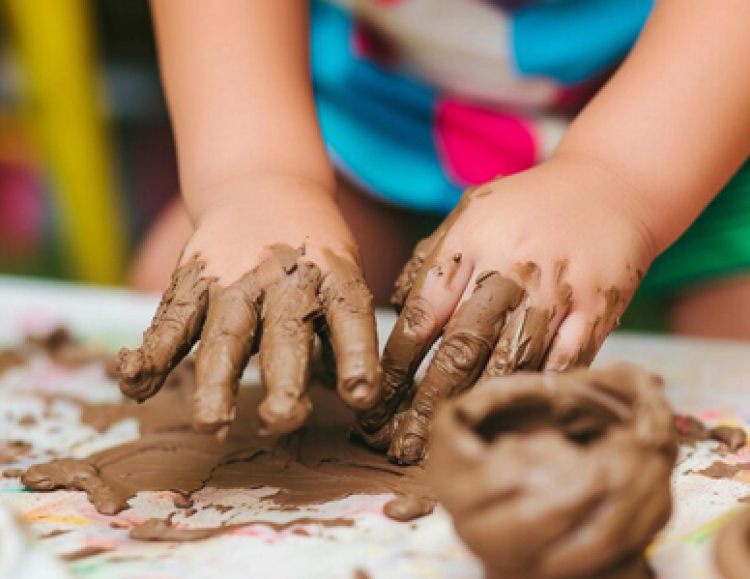 Stage 01 · Exploration
What play is actually doing, a day from drop-off to pick-up, and why there is no hurry.
Explore Pre-Primary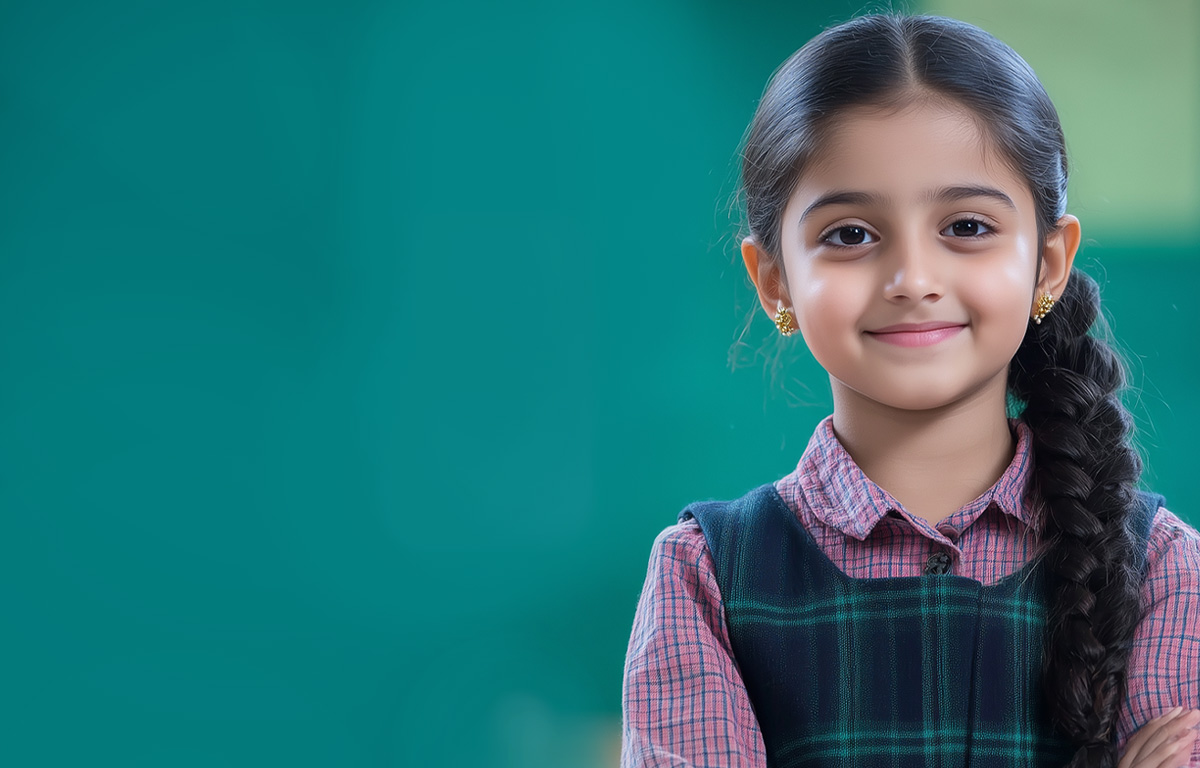 Stage 02 · Foundation
The three pillars, phenomenon-based learning, and an honest answer on board results — CBSE and ICSE alike.
Explore Grades 1–7The method is how we teach. The board is what the syllabus contains. Pick the board your child is on, or the one you are weighing, and see what changes.
We teach the full CBSE syllabus with full CBSE rigour — the Finnish way, where memorising stops and understanding starts.
CBSE is itself shifting from recall-based testing to competency-based assessment under NEP 2020. Finnish method is built for exactly that shift.
ICSE's celebrated depth meets Finnish joy — all of the board's rigour, none of its reputation for heaviness.
ICSE's internal-assessment culture asks for continuous project work, research and independent thinking — the things this method produces as a by-product.
Same teachers. Same labs. Same four-stage continuum. That is the Jain Heritage difference — and it is board-blind by design.
Call our admissions team on +91 96630 21118 — Monday to Saturday. Or leave your details and we will call you back at a time that suits you.
Pick your board below for the board-specific answers — the rest apply to every child on campus. Stage-specific questions — class sizes, the daily rhythm, transport, food — are answered on the Pre-Primary and Grades 1–7 pages.
Neither has to. The board is CBSE, the syllabus is CBSE, the certificate is CBSE. Finnish pedagogy is the method of delivery, not a substitute curriculum. And the two are converging anyway: CBSE is moving toward competency-based assessment under NEP 2020, which is precisely what Finnish method is built for.
No. Those are curricula or full programmes; this is a CBSE school using Finnish teaching practice. The nearest honest summary is: the syllabus and the certificate are Indian and national, and the way the room is run is Finnish — adapted, because as our own framework puts it, not everything from Finland applies here.
Yes. Formal assessment runs to CBSE requirements at every grade where the board asks for it — unit tests and term exams included. What changes is how a child gets there: a concept that was understood rather than memorised holds up better in Grade 10, and better still in a competitive exam hall. Understanding is preparation, not a detour from it.
Neither has to. The board is CISCE, the syllabus is ICSE, the certificate is ICSE. Finnish pedagogy is the method of delivery, not a substitute curriculum. And the fit is natural: ICSE's internal-assessment culture already asks for continuous project work, research and expression — exactly what Finnish classrooms produce every week.
No. Those are curricula or full programmes; this is an ICSE school using Finnish teaching practice. The nearest honest summary is: the syllabus and the certificate are Indian and CISCE, and the way the room is run is Finnish — adapted, because as our own framework puts it, not everything from Finland applies here.
It lightens how the load is carried, never what it contains. Your child studies the full ICSE syllabus — its language depth, its project work, its analytical writing. Phenomenon-based learning simply means that depth arrives through inquiry and discussion rather than through a homework pile, so the board's celebrated rigour stays and the drudgery goes.
Yes — and they will, repeatedly, in projects, presentations, sport and unit tests. What we do not do is manufacture pressure by publishing a rank order and letting a nine-year-old conclude they are a number. Comparison against last term is a harder standard than comparison against the class, because there is nowhere to hide in it.
Each child keeps an individual learning portfolio that follows them through the stages: work, growth, teacher observations and the child's own reflections. Day to day, assessment is formative — observation, discussion, reflective journals, peer and self-assessment. Formal assessment continues to the requirements of the board your child is enrolled under. You see all of it in person, not as a printed position.
It moves with them. That handover is the reason we describe the school as a continuum rather than as stages: a child's learning-style profile and portfolio are handed to the next teacher, so nobody starts from zero in June.
The teachers are trained in Finnish teaching practices and our professional development runs continuously on that footing. The flags on this site describe where the method came from and where it is taught. They are a description of practice, never an endorsement badge, and we would rather be held to what happens in the classroom than to a logo.
A philosophy page is only worth the classroom behind it. Ask to see an ordinary morning, and hold what you read here against what you see.
Sy No 22/2 & 25/2, Rayasandra Main Rd,
Rayasandra, Bengaluru, Karnataka 560099
Two minutes. A counsellor calls you back to confirm a slot.
Your details go to our admissions team and nowhere else. We do not sell or share them.